
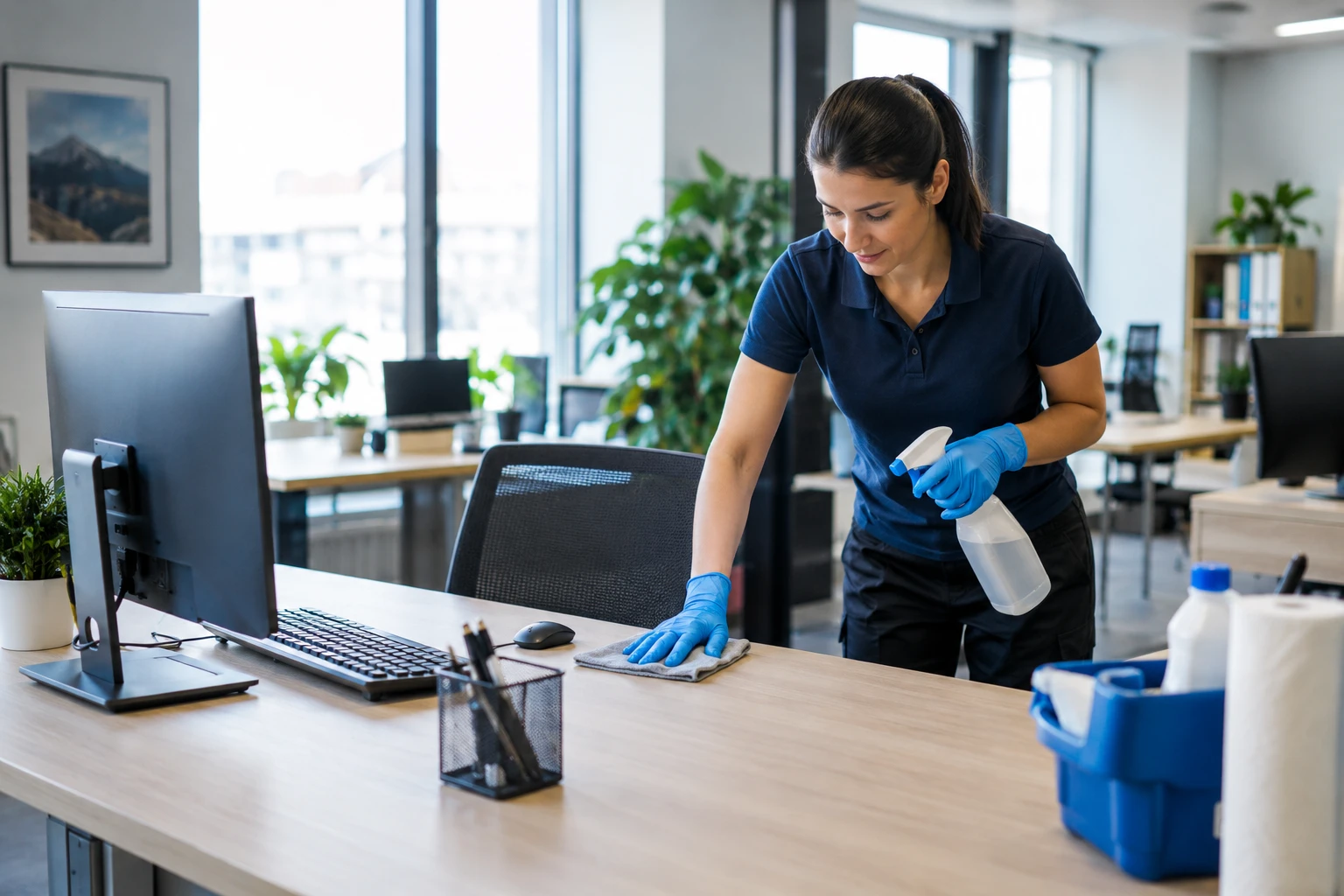
Most people spend a large part of their week at work, so surroundings shape health and mood. A tidy space feels calm, while grime breeds illness and stress. This guide covers hidden germs, fresher air, costs, and expert help. Each section uses plain words, so you can act right away. Even modest effort brings visible gains, which keeps motivation high.
What Germs Hide in Your Workplace?
Desks often carry more bacteria than toilet seats. Phones, keyboards, and mice collect germs because hands touch them all day. Shared kitchens add risk, since sponges and fridge handles pass bacteria between coworkers. Shared fridges and coffee machines also hold surprising amounts of grime. Regular scrubbing breaks that chain, while good habits help further: cover coughs, bin used tissues, stay home when ill.
Flu viruses can linger on hard surfaces for hours. One sick colleague may spread illness across a whole team, which means lost days and missed deadlines.
Common hotspots include:
- Door handles, light switches;
- Keyboards, phones, mice;
- Kettle taps, microwave keys;
- Meeting room tables;
- Lift controls.
Wipe high-touch spots daily with a suitable disinfectant. Wash hands often, too, because soap beats most germs. Disposable wipes near shared devices encourage quick cleaning between users. Posters beside sinks remind everyone about proper handwashing.
Simple Ways to Improve Air Quality in Your Office
Stuffy rooms make people sleepy and give them headaches. Fresh airflow brings back focus, so open windows for ten minutes each morning when weather allows. Doing that dilutes dust, smells, and stuffy warmth. Humidity matters too. Overly dry conditions irritate throats, whereas damp corners grow mold. Fix leaks quickly, plus consider cheap monitors showing readings instantly.
Plants help a little, though they cannot replace ventilation. Vacuum with a HEPA filter to trap tiny particles instead of blowing them around. Change heating and cooling filters on schedule. Position desks away from heaters and blocked vents so airflow reaches everybody. Skip strong air fresheners, because they add chemicals rather than removing them.
Quick air checks:
- Open windows briefly each day;
- Dust surfaces using damp cloths;
- Replace filters every few months;
- Keep bins covered, emptied;
- Avoid heavy perfumes, sprays.
How Much Does Professional Office Cleaning Cost?
Prices depend on size, location, and frequency. Many UK firms charge roughly £12 to £20 hourly for each cleaner. A small team of ten might need two visits weekly, costing a few hundred pounds monthly. Larger spaces often receive discounts for steady contracts.
Extras raise bills. Carpet cleaning, window washing, and deep sanitising usually run higher than routine tasks. Evening visits may cost less, since fewer people get in the way. Ask for written quotes from at least three suppliers, then compare what each includes. To estimate budgets, count desks, bathrooms, and floor area first. Suppliers often price per square metre as well, so measurements help negotiation. Contracts usually run monthly, with notice periods varying between firms. Supplies may arrive free or cost extra, so confirm which applies before signing.
Be careful with prices that seem too low. Cheap deals may hide rushed work or poor supplies. Insurance and trained staff deserve a fair fee. Regular office cleaning pays back through fewer sick days and happier teams.
When to Hire a Commercial Cleaning Service for Your Office
Doing it yourself suits tiny spaces. Trouble starts once staff grumble about dirty kitchens, or when chores steal time from real work. Growing teams, busy reception areas, and strict hygiene needs all point toward outside help.
Signs it is time:
- Bins overflow before the week ends;
- Bathrooms look tired by Wednesday;
- Employees take sick days more often;
- Visitors notice dust or smells.
A trained crew brings proper equipment, tested products, and fixed schedules. Commercial cleaning firms also cover holidays and sick leave, so quality stays steady. When comparing options, ask about insurance, references, and green products. A reliable cleaning service should explain exactly which tasks each visit includes. Trial periods let you test quality before committing long term. Share feedback early so standards match expectations. Outsourcing also avoids hidden expenses such as buying machines, training employees, and storing products.
Healthy workplaces rest on small, repeated actions. Wipe touch points, refresh the air, and budget wisely for professional help. Each step lowers illness and lifts morale. Start small this week: choose a hotspot, tidy windows, request quotes. Momentum builds fast.
Ready for a spotless workplace? Busy Bee Clean offers friendly, dependable teams for offices of every size. Visithttps://busybeeclean.co.uk/ today and request a quote.